

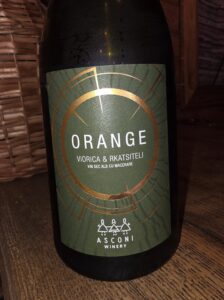
 Orange wines always have a certain level of mystery, since the production technology is the same as for red wines – maceration on the skins. The combination of two interesting varieties resulted in an equally interesting wine, judge for yourself.
Orange Viorica and Rkatsiteli is a dry white wine, which, as I mentioned above, was made using an atypical technology for white wines, in which white varieties are processed in a way characteristic of red wines. After hand-selecting healthy bunches, the Viorica and Rkatsiteli grapes were crushed and then left to ferment and macerate on the skins. It is this longer contact of the must with the skins, pulp and seeds that gives the wine a more pronounced structure, tannins and intense colour. That is why Asconi refers to it as orange wine, i.e. orange wine made from white grapes using the maceration technology.
The varieties used in the wine represent an interesting combination of two different winemaking traditions. Viorica is a variety created directly in Moldova in 1969. As I mentioned with the sparkling wine “9 Muses Viorica” – its parents are Seibel 13-666, a French interspecific hybrid, and the Italian aromatic variety Aleatico, considered a red Muscat. What I did not mention, however, is that both parents of Viorica are blue varieties, but Viorica is a white grape variety. It brings a distinctive aromatic character to the wine, especially floral and fruity notes. In Moldova, it is today considered one of the characteristic varieties of local viticulture.
The second variety is Rkatsiteli, a traditional Georgian white variety originating from the Kakheti region in eastern Georgia. Its name, as I mentioned in the article about Tsarapi Winery’s Rkatsiteli wine, roughly translates to “red stem” and is among the historically significant varieties of the Caucasus, which naturally has higher acidity and the ability to create wines with good structure. The cultivation of this variety has a long tradition in Moldova and is among the significant Caucasian varieties grown in the country. In Moldovan conditions, it creates dry wines with good acidity and balanced structure.
The combination of Viorica and Rkatsiteli is therefore technologically interesting. Viorica brings aromaticity, while Rkatsiteli provides acidity and a firmer skeleton of the wine. Maceration on the skins subsequently changes their character compared to classic fresh white wine. The result is not a wine built only on primary fruitiness, but a wine with a more pronounced texture, fine tannins and a more complex expression.
Asconi Winery is a family winery founded in 1994. It was established as a family business and from the beginning it has combined traditional Moldovan viticulture with modern technological processes. The winery is located in the village of Puhoi and has its own vineyards near the village of Geamăna in the Anenii Noi district, approximately 10 kilometers from the winery. Developing its own raw material base has been an important part of the development of the winery for Asconi. After about ten years, it manages more than 500 hectares of vineyards. Today, Asconi produces more than three million bottles per year and focuses primarily on white and red wines, in addition to which it also produces rosé, dessert and fortified wines. Interestingly, Asconi uses modern technology for classic wines and also ages part of its production in oak barrels, while for this Orange wine it uses a completely different principle. And it is this difference that makes Viorica and Rkatsiteli a good example of how the same white varieties can be used to create a wine with a significantly different structure.
Here is its description:
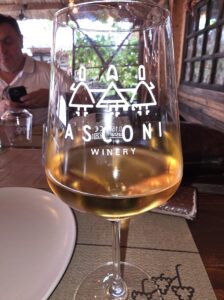 The color is amber with copper reflections. The color is significantly more pronounced than in a classically produced white wine from the same varieties. The producer Asconi reports an intense yellow color with amber reflections.
The aroma is more pronounced and complex than in a regular white wine from the Viorica variety. Tones of wild flowers, ripe apricots and sweet spices appear. In the background, you can also smell dried fruit, delicate tea and herbal tones, which are more typical of wines with longer contact with the skins than for classic fresh white wines.
The taste of the wine is fuller, drier and fruity, with well-preserved acidity. Maceration adds texture and fine tannins to the wine, which are not usually pronounced in classic white wines. In the mouth, it feels broader and more structured, while the fruitiness is complemented by a spicy character and a longer finish. Asconi describes this wine as full and fruity, with balanced acidity, fine tannins and a complex, persistent finish.
Alcohol is 12.5% vol. This is a medium alcohol level that does not seem dominant for this type of wine. Given the structure, the wine remains sufficiently firm even at this alcohol content.
The recommended serving temperature is 10–12 °C. At this temperature, the freshness of Rkatsiteli and the aromaticity of Viorica are preserved, while at the same time the structure remains sufficiently pronounced.
Thanks to the acidity, fine tannins and fuller structure, Orange Viorica and Rkatsiteli is more versatile than classic aromatic white wine. It goes well with baked and grilled fish, seafood, poultry, vegetable dishes, dishes with herbs and softer to medium-aged cheese. Asconi directly recommends combining it with cheese, fish and seafood. For more substantial dishes, it can also be interesting to pair it with oriental or Caucasian spicy cuisine. The fine tannins and spicy character of the wine can also cope with dishes that a classic aromatic white wine would be too light for.
Orange Viorica and Rkatsiteli is an interesting example of a Moldovan orange wine, in which the resulting character is determined not only by the varietal composition, but above all by the method of vinification. Viorica gives the wine aromaticity and local Moldovan character, Rkatsiteli brings acid and structure. The technology of longer maceration on the skins moves the wine from a classic white wine towards a more textured style with an amber color, fine tannins and a longer finish.
From a tasting perspective, the comparison with the classic Viorica wine is especially interesting. While the classic Viorica is primarily based on floral aromatics, fruitiness and freshness, Orange Viorica & Rkatsiteli has another layer – structure, tannin and complexity acquired through contact with the skins. This is where its main value lies: it is not just an “orange” wine by color, but a wine in which the technological process significantly changes the sensory expression of the two varieties.
For the lover of orange wines, Asconi Orange Viorica and Rkatsiteli is an interesting example of modern Moldovan vinification, which uses the local Viorica variety together with the historical Caucasian Rkatsiteli variety and combines them in a style that is increasingly represented in contemporary natural and artisanal winemaking.
#tipnavino #moldavskevino #moldovawine #orangewine #asconi #viorica&rkatsiteli


